

I was meandering around a thrift shop and stumbled across the perfect artefact of a time in the 2000s where policing women’s bodies was second nature. ‘What not to wear” by Trinny Woodall & Susannah Constantine is peak 2000s body-policing energy: glossy but harsh, all about “fixing women” instead of celebrating them.
Published in 2002, What Not to Wear was a spin-off from their hit BBC show of the same name.
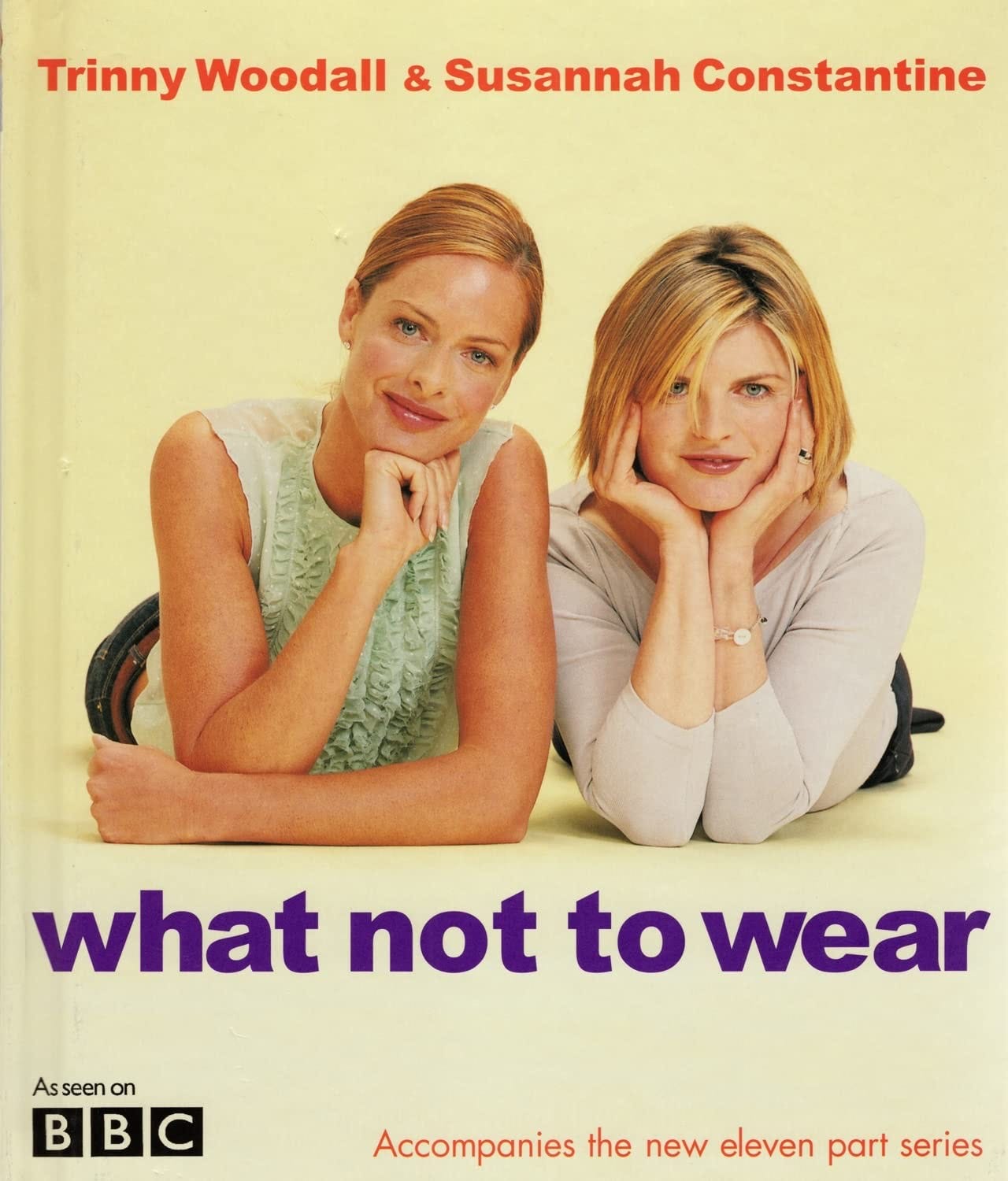
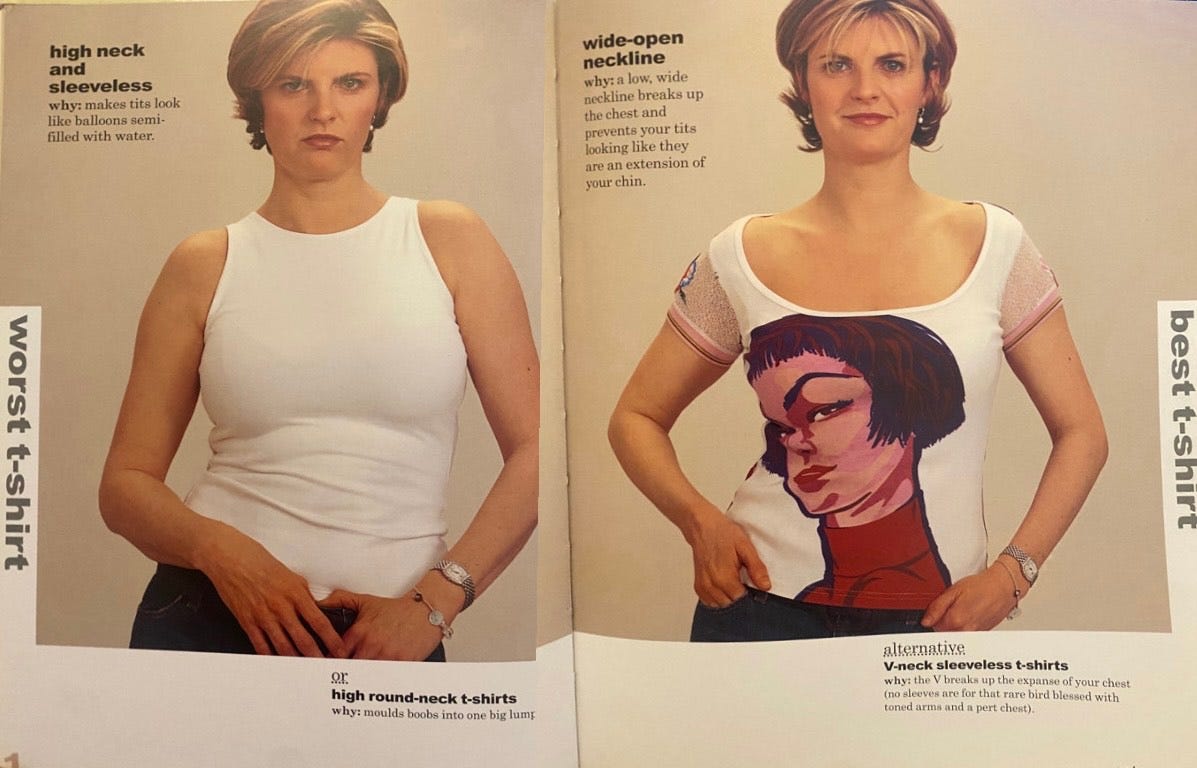
The cover says it all: two impeccably groomed women leaning on their hands, smiling like they’ve cracked the code to female confidence. Inside, though? It’s chaos. One page about what tops to wear if you’re curvier, reads: “High neck and sleeveless: makes tits look like balloons semi-filled with water.”
That’s not parody, that’s an actual quote from a BBC-endorsed book that women were meant to take seriously.
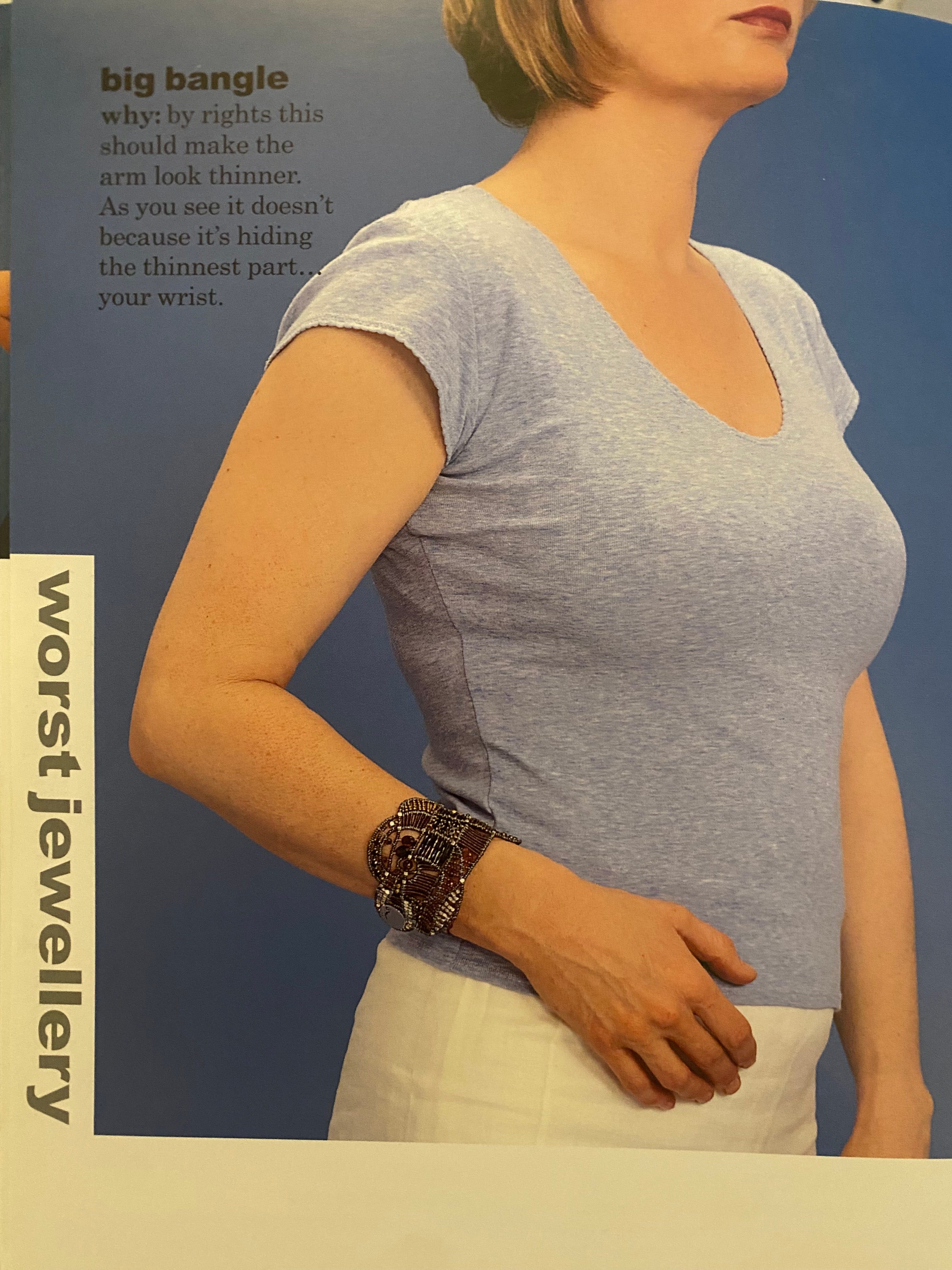
Another page shows Susannah wearing a big chunky bangle, with the caption:
“By rights this should make the arm look thinner. As you see, it doesn’t because it’s hiding the thinnest part… your wrist.”
The suggestion? The next page says women with big arms should wear small bracelets instead. The book is like a manual on how to micro-analyse every inch of your body. And this was normal! This was empowerment in the early 2000s, being taught to see yourself through a magnifying glass.
Trinny and Susannah were the UK’s original style police. Their BBC show What Not to Wear ran from 2001 to 2005, and their whole brand was “tough love.” Every week they’d share their style secrets, which involved ripping their appearance apart, then taking a microphone and asking women on the street what they hate about themselves. Their tips would then include what was wrong with women’s clothes (and, by implication, their body). Every outfit had a moral attached. Clothes weren’t just clothes, they were a reflection of whether or not you respected yourself.
And it wasn’t just them. The early 2000s were drowning in makeover culture, 10 Years Younger, Extreme Makeover, How to Look Good Naked. Everything was about transformation, and transformation always meant correction. The word “flattering” became gospel. But really, “flattering” just meant smaller. Less visible. Less you.
The book carries on with more suggestions on what jeans you shouldn’t wear, what tops you need to put back on the rack, and which necklace won’t make you look like you’re wearing a dog collar.
Looking back at What Not to Wear now, the language feels shocking, but it’s the same energy that shaped how a generation of women saw themselves. They were all trained to think confidence came from camouflaging. If your boobs, hips, or arms didn’t fit the ideal, it wasn’t the system that was wrong, it was your clothes.
And yet, there’s something darkly funny about reading it now. The audacity is off the charts. Like, Trinny and Susannah weren’t pretending to be body positive, they said the quiet part out loud.
Finding this book made me realise how much has changed, or at least, how much we’re trying to change. These days, the “rules” come from influencers and algorithms instead of TV hosts, but the pressure’s the same. “What’s flattering?” just got rebranded as “what’s aesthetic.”
So yeah, I bought What Not to Wear (it cost me £2). Not for the advice, but as a little time capsule of an era obsessed with “fixing” women.
Because if the 2000s taught us what not to wear, maybe now it’s time to unlearn what not to be.
I would say things have changed for the worse in that women now voluntarily mutilate their bodies to fit a beauty standard and instead of having to purchase a physical magazine at a store we’re constantly bombarded with propaganda and advertising on social media
Love the ending line of this! Amen 🙌🏻