

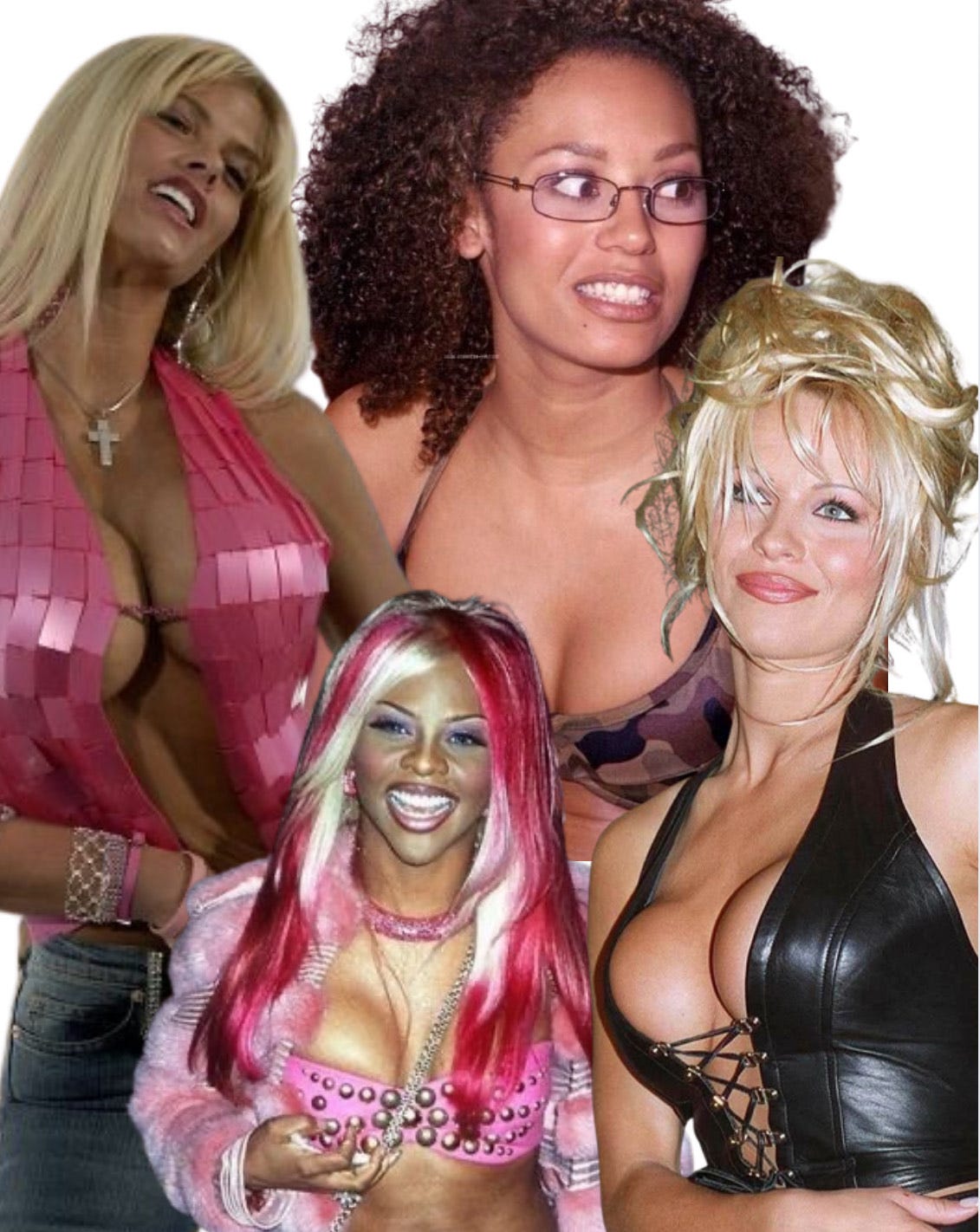
“Are you actually going to wear that?” A friend says to me
“Yeah..what’s wrong with it?” I look down at my top, it’s woven, it’s black, there’s a deep v cut that starts at the bottom of my bra strap and extends across my chest and shoulder. The fabric lightly cups my boobs.
“Your boobs are out” she replies.
I frown at her and let the words swim around in my thoughts for a bit. Is she saying this out of concern? Is the top not my colour? I can’t fathom what the issue is.
“Yeah, so?” I reply.
She shrugs. “It’s no big deal. Get them out if you want. I would too, if I had them.”
I wish I could say this was the first instance where an interaction made me feel insecure about the two chunks of bodily fat attached to my chest, but it isn’t. Since puberty hit, I’ve been made aware of a seemingly silent fact: my boobs are causing a disruption.
My first memory was at school, I was nine and my mum bought me my first training bra. I lifted my arm up to answer a question from my teacher, as I lifted my arm a glimpse of my bra peeked out from the sleeve near my armpit. Two boys snickered and I heard them say “she’s wearing a bra”. I didn’t understand what they found funny, what the issue was. My mum told me I needed to wear one now. I wasn’t made to feel insecure about it by her, in fact she framed it in a way that this was an exciting transition into becoming a teen, but just that “I had to start a bit early”. I didn’t question it. I was excited when she purchased my little floral bra. I wasn’t embarrassed until the world told me to be.
As I went through puberty I slowly became introduced to the ‘bimbofication’ of big boobs. Katie Price, Pamela Anderson, page 3 models. I became aware of the persona attached to it.
As I got older, the world around me started handing out these little scripts about boobs like it was passing leaflets on the street. Suddenly, there was this whole character assigned to me that I never auditioned for. The “big-boobed girl.” The bimbo. The one who must be flirty, must be sexual, must be naive, must be asking for attention, she probably doesn’t care about academic achievements, she must want “all the boys after her”, even though I was just wearing a top and trying to mind my business.
It’s mad how quickly a bit of anatomy becomes a personality trait in everyone else’s mind.
And the thing is, the messaging wasn’t even consistent. One minute, big boobs were the most coveted thing on the planet: pushed-up, oiled, centre-folded. The next minute, they were a liability. Men created an entire patriarchal fantasy around them, but also used it as an attack on women who embraced them. “She’s a slut”.
You had to “manage” them. Hide them. Minimise them. Pretend they weren’t there. Almost like society couldn’t decide whether it worshipped boobs or was terrified of them.
And then there was the weird envy/concern hybrid that I would be hit with. Like that time an old friend who posted a picture of us and slapped a strategically placed emoji over my chest. She messaged me after, all proud, like:
“I covered your boobs so no one stares. Thought you’d prefer that x”
It felt like she’d taken a marker pen to me. Like my body needed censoring. Like my chest was something shameful, or dangerous, or too provocative to exist uncensored on her feed. It made me feel strange.
Growing up, I noticed how those comments stacked up. All the “don’t wear that,” “you’ll look slutty,” “those necklines are for flat-chested girls,” “big boobs can’t look classy,” “men will stare,” “big boobs make you look fat, buy a minimiser bra.” As if being a woman with cleavage was automatically scandalous. As if the rules were written before I even got a chance to “break them.”
No one tells you that half of that paranoia comes from male validation culture and the other half comes from women who’ve been conditioned to fear judgement themselves. It’s like everyone is reacting to a patriarchal fever dream and we end up policing each other’s bodies for free.
A lot of this “cover your boobs up” commentary from other women isn’t even really about you. It’s about survival in a system that pits us against each other before we even know what’s happening. Men built a world where women are ranked, judged, compared, rated, and then left us to fight over whatever scraps of approval they hand out. So of course women who don’t have a “bigger chest” get fed this insecurity that they’re somehow “less womanly,” and “less desirable,” and women who do have one get treated like they’re “not classy,” and “too much.” It’s the same patriarchal script from two angles. And when you grow up being told male attention is a prize, women start projecting their own anxieties onto each other without even realising they’re doing it. Men thrive in a system where we’re all tearing each other down.
It’s not that women naturally want to police each other’s bodies, it’s that we’ve all been trained to. Men benefit from a world where we’re too busy competing, comparing, and critiquing each other to actually clock that patriarchal views of women’s bodies are the problem.
And honestly? The scrutiny worked. For years.
I shrunk myself without even realising.
I started dressing to make other people comfortable. High necks. Wide straps. Layered tops. Anything that said I’m not trying to be sexy, I promise, please don’t make assumptions about me. I tried to be the “good girl” version of someone with boobs, which is basically just a woman who doesn’t exist.
But the turning point for me? Pamela Anderson, 90s era.
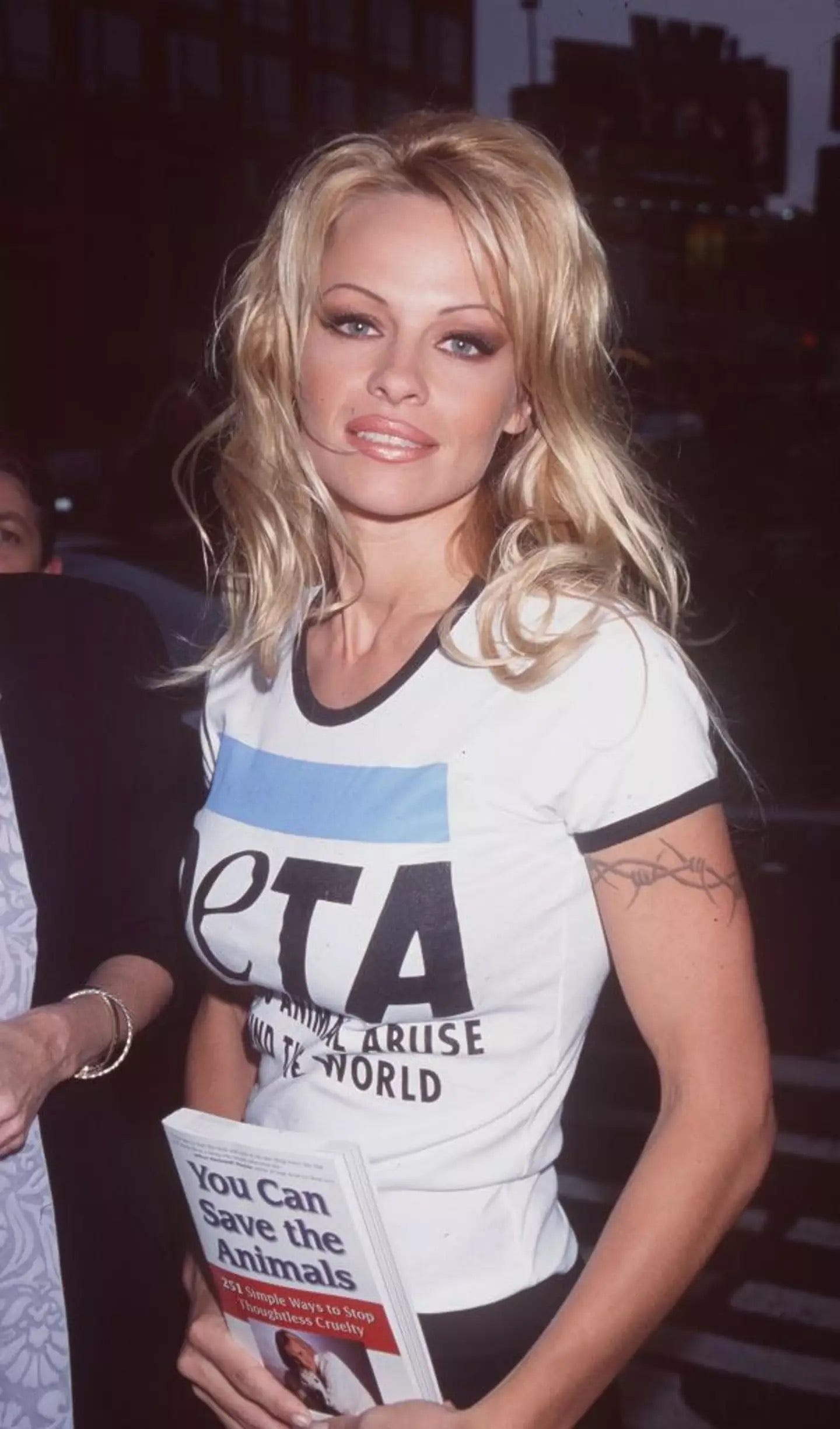
Not the caricature people still joke about. The real woman behind it all. The interviews where she was smart, funny, self-aware, gentle, an animal lover. The way she understood the world had created a persona for her, and she still chose to take ownership of it rather than run from it.
There was something so liberating in watching a woman who’d been hyper-sexualised more than almost anyone in pop culture still stand there, soft voice, kind eyes, refusing to let the world make her ashamed of herself. She never apologised for her body. She never toned herself down. She wore the outfits, she took up the space, she didn’t try to convince people she was “respectable” by flattening herself.
I think that’s when it clicked for me:
People will judge you regardless.
They judged me when I hid.
They judged me when I showed.
So why was I living according to their perception?
My boobs were never the problem.
The projections were.
The stigma. The assumptions. The sexist narratives. The internalised misogyny dressed up as “advice.” The weird cultural obsession with controlling how women present themselves.
And somewhere in the noise, I’d forgotten that I get to decide who I am.
So now? I’m reclaiming my tits. Not in an “everyone look at me” way. But in a “this is my body and I’m done apologising for it” way.
I’m done dimming myself down so other people don’t feel threatened or confused. I’m done interpreting my own chest through the male gaze. I’m done letting other people’s insecurities dictate what I can wear. I’m not a walking stereotype because I have fat on my chest. I’m not a “slur,” I’m not an invitation, I’m not a warning label.
I’m just me.
With boobs.
And that’s allowed.
The part that gets me is the way people act like girls are choosing their breast size or they should choose to leave their breasts at home. Would if we could, truly.
Have you read the book "Tits Up" at all? I started it and haven't finished yet. There is SO MUCH cultural baggage around boobs it's fascinating!